






.jpg)
_2.jpg)


.jpg)


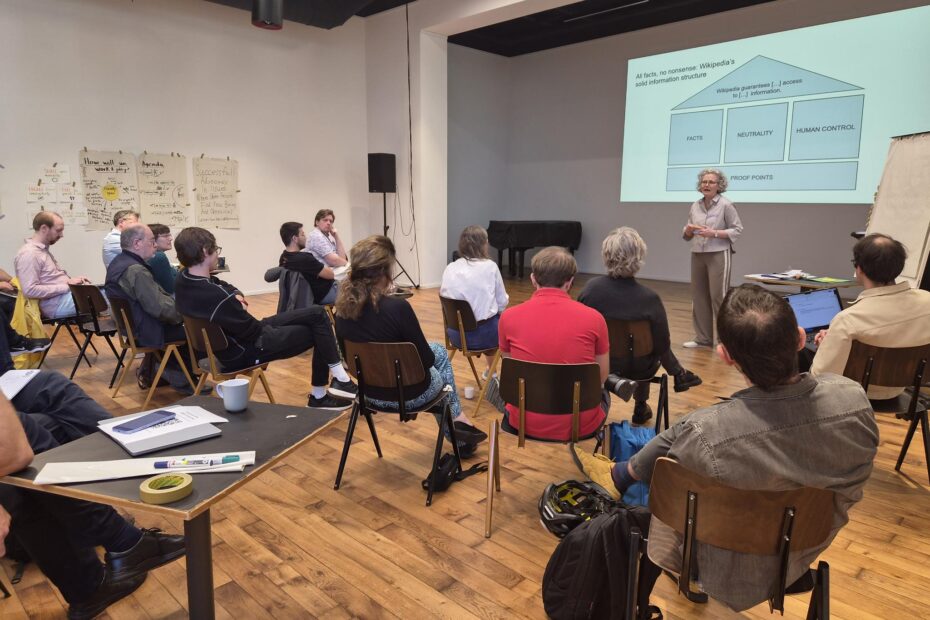
Every autumn, Wikimedia Europe brings together a group of Wikimedians who care about policy — volunteer advocates, staff, and people from like-minded organisations. Last week we held the eleventh edition of what we have always called, half-jokingly, the Big Fat Brussels Meeting. Thirty-one people from eighteen countries. Two days. Here’s a quick recap.
Day one: the state of the EU, and a sentence that stuck
The first day was devoted to the current EU policy situation: the EU Kids Act and age verification, AI and copyright reform, the CSAM Regulation, open government data, and what is happening with the Digital Omnibus. Affiliates shared updates from their own countries, which is always useful — EU decision-making is a constant back-and-forth between Brussels and national capitals, and having advocates who can carry consistent narratives and asks in as many places as possible is a structural advantage the Wikimedia movement is actively leaning into. For the first time, advocacy staff from Wikimedia Czech Republic joined the meeting. They asked for and received input from peers to help shape the chapter’s first comprehensive advocacy strategy. A staff member from Wikimedia in Ireland also attended — that team is just beginning to build its policy reflex, and it was great to see them attend.
A standout moment came from Signe Krantz of Wikimedia Sweden, who attempted to distil the movement’s core advocacy proposition into a single line — and, by the room’s reaction, largely succeeded: “Most people feel like they have a choice between the government or large corporations controlling their digital world. We have a third way for them.”
The framing of community-governed and not-for-profit platforms as an alternative to both state control and commercial capture struck a cord.
Day two, morning: how to hack AI?
The second day opened with a deep dive into AI. The goal was not to produce a position paper but to map the full range of AI-related work and ideas already happening across the Wikimedia movement, and to identify what Wikimedia Europe and its members might want to actively prioritise. The picture that emerged is, unsurprisingly, complex.
Wikimedia has a multifaceted relationship with AI. Our projects are used to train large language models and to ground their generative output. People and organisations with the movement develop tools. For instance an AI-driven citation tool already showing real promise, with potential reach well beyond Wikimedia projects with further investment. We grapple with what it means to keep our projects open while also working out how to ensure that large commercial AI systems contribute to the infrastructure costs they burden us with. And we need to defend against AI being weaponised for disinformation. We are also very committed to projects and communities that are human. After all, knowledge is human!
The group seemed to agree that AI needs human knowledge to have a chance to be trustworthy and grounded. Knowledge that is community-verified, openly licensed, maintained by people who care.
Aligning all of this into a coherent external narrative and concrete actions is challenging. But it is necessary, and this meeting was a step toward it.
Day two, afternoon: sharpening the message
The afternoon was given over to a communications workshop with an external specialist, focused on one core conviction: that community-governed platforms like Wikipedia are a booster for information integrity. Wikimedia is about human knowledge. As AI-generated content becomes ubiquitous, being able to defend and explain why that distinction matters, and why it is more important than ever, is becoming central to our advocacy work.
Partners and allies
The meeting also brought together a number of friendly organisations whose work intersects with ours in important ways. The OpenStreetMap Foundation attended — they are in the process of relocating to Brussels and exploring collaboration with Wikimedia Enterprise. IFLA, the international federation of library associations, was represented too. We worked on aligning positions across AI, child rights, copyright, and the treatment of the commons and cultural heritage. Commons projects and cultural heritage institutions share many challenges and goals. We can help each other, and amplify each other’s messages to lawmakers.
We will be back next year. In the meantime, the work continues.