Skip to content

Wikimedia Europe

Visual Portfolio, Posts & Image Gallery for WordPress

Stefan Krause, Germany, FAL, via Wikimedia Commons

Charles J. Sharp, CC BY-SA 4.0, via Wikimedia Commons

Michael S Adler, CC BY-SA 4.0, via Wikimedia Commons

Benh LIEU SONG (Flickr), CC BY-SA 4.0, via Wikimedia Commons

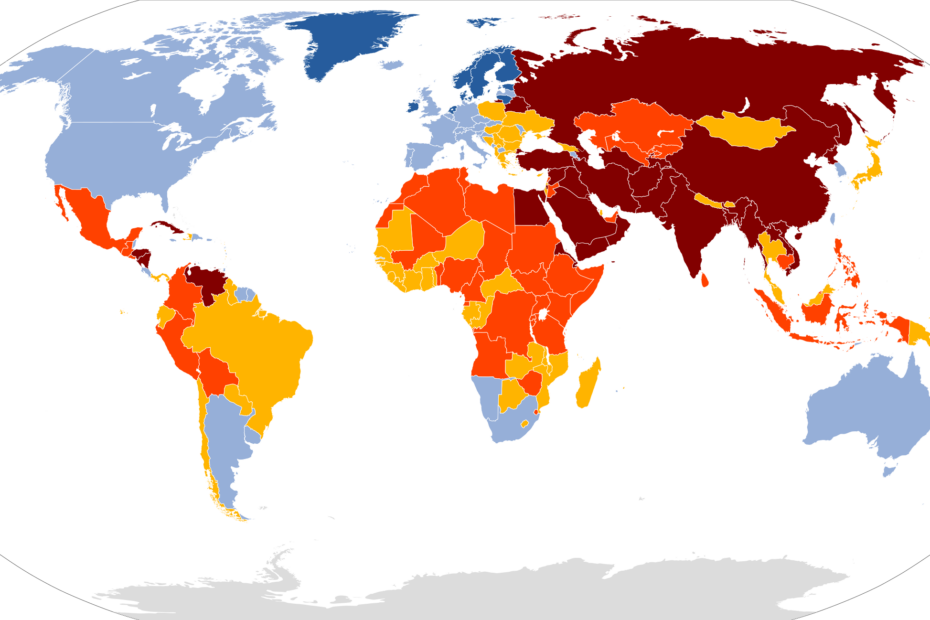
NASA Goddard Space Flight Center from Greenbelt, MD, USA, Public domain, via Wikimedia Commons

JohnDarrochNZ, CC BY-SA 4.0, via Wikimedia Commons

Markus Trienke, CC BY-SA 2.0, via Wikimedia Commons

freedom of expression

THE DEM-Debate project came to an end: the final event

On February 24, the DEM-Debate partners – Wikimedia Europe, the University of Amsterdam and Eurecat – Centre Tecnològic de Catalunya – gathered at the European Parliament in Brussels for the final event of the DEM-Debate project

Read More »THE DEM-Debate project came to an end: the final event

WMEU on the Digital Omnibus & the Russmedia Decision

On 19 November 2025, the European Commission unveiled its Digital Omnibus package — a pair of legislative proposals aimed at simplifying the EU’s digital regulatory framework. The first one is focused specifically on AI, while the second covers data protection and re-use of open data.   

The Commission frames these changes as efforts to streamline complex EU rules. However, civil society groups, many MEPs, and even some Member States argue that they fundamentally alter the EU’s digital rulebook by weakening longstanding data protection principles. 

The Wikimedia movement is made up of its organisations, projects and users. They all depend on robust privacy protections, open knowledge sharing, and solid intermediary liability protections. At the same time, the Wikimedia Foundation, as a service provider, also spends considerable resources on sometimes very complex compliance work in the EU.

With all this in mind it is needless to say that these proposals raise significant questions for Wikimedia. We can identify both positive and negative changes in the published texts. 

Read More »WMEU on the Digital Omnibus & the Russmedia Decision

Building an Enabling Environment for DEMocratic Debate. THE DEM-Debate project

Wikipedia has a significant impact on our everyday lives. The largest free knowledge platform on the internet, we regularly rely on its accessible, up-to-date information to form our opinions, even on critical events such as elections.
While most of the research has focused on how large, commercial platforms address disinformation, less attention has been given to platforms non-profit, community-led platforms such as Wikipedia.
The DEM-Debate project aims to fill this gap by exploring whether, and how, the fact-checking and moderation practices used by Wikipedia during the 2024 European Parliament election have enhanced the reliability of the information ecosystem. It also seeks to determine if these practices can be transferred to other online contexts, fostering an environment that nurtures a more democratic debate.

Read More »Building an Enabling Environment for DEMocratic Debate. THE DEM-Debate project

A Joint Statement on the Use of Surveillance Spyware in the EU and Beyond

We took stance against the use of spyware in the EU and beyond. This pervasive technology poses significant threat to European fundamental values, such as democracy and rule of law, and risks severely infringing fundamental rights to privacy and data protection as well as freedom of expression. Alongside with other civil society and journalists’ organisations we called on the new EU Institutions and Member States to take swift action and ban the use of such a technology. We need to protect citizens, including Wikimedians, and their fundamental rights from undue interference and arbitrary behaviours. Here below you can read the statement with the specific calls for action.

Read More »A Joint Statement on the Use of Surveillance Spyware in the EU and Beyond

Wikimedia Foundation defeats gambling magnate’s lawsuit in Germany

Written by Phil Bradley-Schmieg and Jacob Rogers.

The Munich Regional Court acknowledged that the contested Wikipedia article (Tipico) contained relevant public information and was correctly sourced. This is very good news also for Wikimedia Europe, which closely followed the adoption of the anti-SLAPP Directive and will advocate for its ambitious and effective transposition in the different Member States.

Read More »Wikimedia Foundation defeats gambling magnate’s lawsuit in Germany

European Media Freedom Act: some reflections from Wikimedia Europe

The European Media Freedom Act is a proposal for regulation put forward by the EU Commission in September 2022 aiming at safeguarding media freedom and pluralism in Europe. For Wikimedia it is relevant, because, on the one hand, it wants to regulate how online platforms moderate content by media service providers and, on the other, it introduces some general rules of media law, including the protection of journalists.

Read More »European Media Freedom Act: some reflections from Wikimedia Europe

Retrospective: a year of advocacy at Wikimedia France

Wikimedia France looks back on 2021, a year of advocacy campaigns at national and European level. Bringing the voice of community-governed platforms such as Wikipedia – besides the commercial ones – is not always easy. And while legislators and policy makers receive our arguments and concerns generally positively, there is still a long way to go before our messages and initiatives claim to be embedded in the texts that shape and frame the digital of tomorrow.

Several bills have, this past year, impacted Wikimedia projects and particularly the collaborative online encyclopedia, Wikipedia. Without going into a Prévert-style inventory, Wikimedia France wants to come back to some of its battles that it has carried out relentlessly, in order to defend a vision of a free and open Internet, protecting the rights and freedoms of users.

The Republican Principles bill or “the French DSA”

The bill reinforcing respect for republican principles, originally called “law project against separatism”, was not intended to regulate digital platforms. Indeed, the main objective of this text was to “fight against radical Islam and separatism”. But policy experts ended up qualifying it as a “catch-all”, insofar as a lot of subject matter had been inserted into it, including digital issues.

Read More »Retrospective: a year of advocacy at Wikimedia France